Frequently Asked Questions (FAQs)
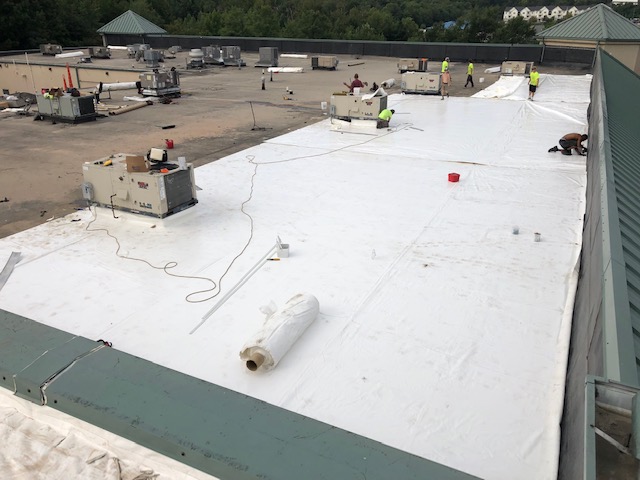
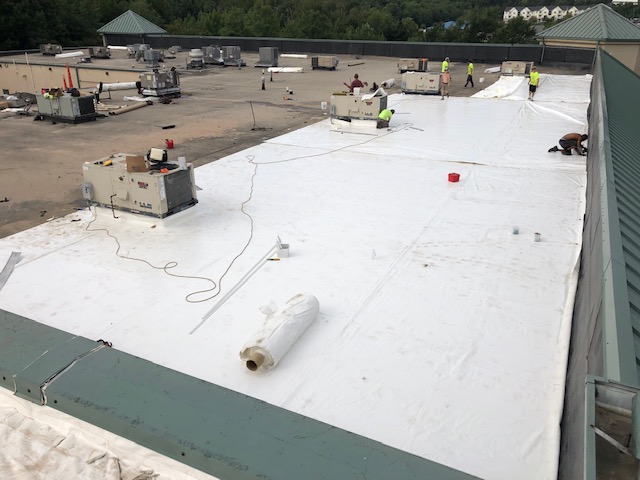
The quality of materials used can greatly impact the longevity of your roofing system! The system used will determine just how long your new roof will last. Weather and climate play important factors as well, that is why we recommend and use Duro-Last Roofing Systems.
Duro-Last leads the industry with warranty coverage, offering a 15 or 20 Year Supreme Warranty with consequential damage coverage for commercial applications of the Duro-Last Roofing System. Additional warranty coverage can also be added to cover things like hail and wind damage.
Reroof, Recover, or Tear-Off: Understanding Your Options
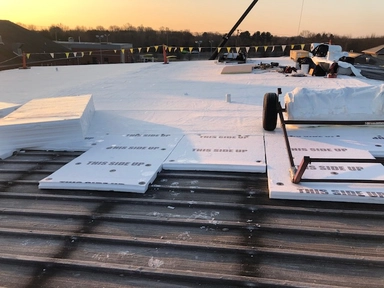
“Replacing” a commercial roof isn’t a single method—there are two very different approaches, and the right one depends on your existing roof’s condition and building code. Knowing the difference helps you budget accurately and avoid paying for more work than you need.
- Recover (reroof over existing) — a new membrane is installed over the existing roof without a full tear-off. When the deck and insulation are dry and sound, this is faster, less disruptive, and less costly because it avoids disposal. Most codes allow only one recover layer, so it’s a one-time option.
- Tear-off (full replacement) — the existing roof is stripped to the deck and rebuilt with new insulation and membrane. This is required when there’s already a second layer, when insulation is wet, or when the deck needs inspection or repair. It costs more but resets the roof completely.
After 2.6 million-plus square feet installed, we help owners choose honestly between the two based on what the roof actually needs—not a one-size-fits-all recommendation.
Signs It’s Time to Replace, Not Repair
Timing a reroof well saves money and prevents emergency disruption. These are the signals that a building has moved past the repair stage:
- Recurring leaks in multiple areas — when patches keep multiplying, the system is telling you it’s near end of life.
- Saturated insulation — trapped moisture destroys R-value and won’t recover; surface repairs can’t fix it.
- Widespread membrane deterioration — brittleness, cracking, blistering, or open seams across the field of the roof.
- Persistent ponding and sagging — drainage or structural issues that repairs alone won’t resolve.
- Age — many commercial membranes are engineered for roughly 20 to 30 years; past that, replacement is often more economical than ongoing repairs.
Replacing on your schedule—rather than after a failure—lets you plan budget, minimize downtime, and avoid interior and inventory damage.
Minimizing Business Downtime During Replacement
For most commercial buildings, staying operational during a reroof matters as much as the roof itself. We plan projects around your business, not the other way around. That means sequencing the work section by section so occupied space stays protected and dry, scheduling loud or disruptive phases around your operating hours where possible, and never leaving the building exposed to weather overnight. For occupied properties—offices, retail, warehouses, and light-industrial facilities across the Baltimore metro—a Duro-Last® PVC system offers a real advantage: its factory-fabricated, low-odor, no-torch installation avoids the fumes and open flame associated with some traditional systems, which keeps tenants and staff comfortable and reduces disruption.
The Replacement Process and System Options
A well-run commercial reroof is methodical from the first inspection to the final walkthrough. Our process typically moves through these stages:
- Assessment and moisture survey — we evaluate the deck, insulation, and drainage to confirm whether a recover or full tear-off is appropriate.
- System design and proposal — we specify the membrane, insulation, and detailing, with clear scope and pricing.
- Tear-off or prep — removal and disposal, or preparation of the existing surface for a recover.
- Installation — new insulation, membrane, flashing, and penetration detailing installed to manufacturer specification.
- Inspection and warranty — final quality check and warranty registration.
As a certified Duro-Last® installer, we frequently specify Duro-Last PVC for flat and low-slope commercial roofs—its prefabricated membrane is custom-fit to your building, cutting rooftop labor and dramatically reducing field seams, the most common leak point. We also work in other single-ply systems where they’re the better fit for your building and budget.
Warranties, Disposal, and Budgeting
A commercial roof is a major capital investment, and the details around it matter. On warranties, manufacturer coverage on premium single-ply systems can extend for decades, but it’s only valid when the roof is installed by a certified contractor to specification—which is exactly why installer credentials matter as much as the material. On disposal, a full tear-off generates significant debris, and we handle removal and responsible disposal as part of the project so nothing lands back on you. On budgeting, for large facilities or multi-building portfolios, replacement doesn’t have to happen all at once—phasing the work across roof sections or budget years is a practical way to manage cash flow while addressing the worst areas first. To discuss a replacement or a phased plan for your property, call 410-838-5900.
Frequently Asked Questions
How long does a commercial roof replacement take?
It depends on the size of the building, the roof system, and whether it’s a recover or full tear-off, but many mid-sized commercial reroofs are completed in a matter of days to a few weeks. A recover is generally faster because there’s no tear-off or disposal. We provide a realistic schedule up front and sequence the work to keep your business operating.
What is the difference between reroofing and a full roof replacement?
Reroofing often refers to a recover, where a new membrane is installed over the existing roof without stripping it—faster and less costly when the deck and insulation are dry. A full replacement is a tear-off down to the deck, required when there’s already a second layer or the insulation is wet. Building codes typically permit only one recover, so the existing roof’s history determines which is available.
Can we stay open for business during the reroof?
Yes. For most offices, retail spaces, and warehouses we sequence the work so occupied areas stay protected and dry, and we never leave the building exposed overnight. A Duro-Last® PVC system is especially well suited to occupied buildings because its no-torch, low-odor installation avoids fumes and open flame.
How long should a new commercial roof last?
A quality single-ply commercial roof installed to specification is typically engineered for roughly 20 to 30 years, and often longer with proper maintenance. Actual lifespan depends on the system, installation quality, drainage, and how well the roof is maintained. Certified installation and regular inspections are the biggest factors in reaching the high end of that range.
Do I need to tear off my old roof, or can you install over it?
If your building currently has only one roof layer and the insulation and deck are dry, a recover installed over the existing roof is often possible and saves on labor and disposal. If there’s already a second layer, wet insulation, or deck damage, a full tear-off is required by code and by good practice. A moisture survey during our assessment determines which applies.
Can a commercial roof replacement be phased over time to manage cost?
Yes. For large facilities or multi-building portfolios, we can phase replacement across roof sections or budget years, tackling the areas in worst condition first. Phasing spreads the capital cost while still stopping active problems, and we’ll help you prioritize sections based on condition and risk.
Explore Our Commercial Roofing Services
Duro-Last® PVC Systems · Flat & Low-Slope Roofing · Commercial Roof Repair. Serving Bel Air, Baltimore & the surrounding area.
Request a Free Commercial Roofing Estimate
Call 410-838-5900 or request your free estimate online — backed by 50+ years of commercial roofing experience.