
What Flat & Low-Slope Roofing Really Means
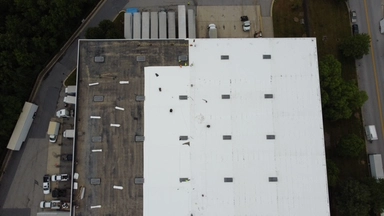
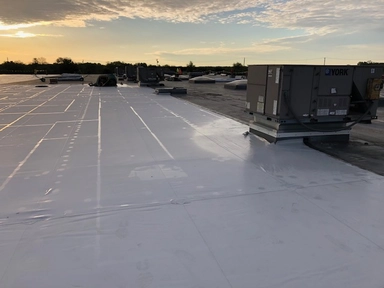
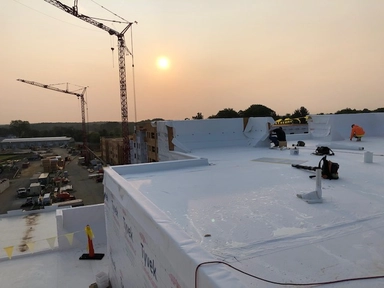
Despite the name, a "flat" commercial roof is never truly flat — it's a low-slope system engineered with a slight pitch (typically less than 3-in-12) to move water toward drains, scuppers, and internal drainage. This is fundamentally different from the steep-slope shingle roofs on homes. Because water drains slowly and can pond, low-slope roofs depend on a continuous, fully sealed membrane rather than overlapping shingles that shed water by gravity.
That single distinction drives every material and design decision. On a low-slope commercial roof, the membrane, the seams, the flashings at every penetration, and the drainage all have to work as one waterproof system. A weakness in any one of them is where leaks begin — which is why professional installation and detailing matter far more here than on a residential roof.
Membrane Systems for Low-Slope Commercial Roofs
Choosing the right membrane depends on your building's use, budget, and exposures. The proven options we install and service include:
- PVC (including Duro-Last®) — heat-welded thermoplastic with excellent chemical, grease, and fire resistance; ideal for restaurants, manufacturing, and long-term performance.
- TPO — a cost-effective reflective thermoplastic popular for its energy performance and welded seams.
- EPDM — a durable synthetic rubber membrane well suited to certain climates and simpler roof geometries.
- Modified bitumen & built-up systems — multi-ply asphaltic systems that offer redundancy and rugged durability for high-traffic roofs.
As a certified Duro-Last® installer, we often recommend PVC for Maryland commercial buildings that need welded-seam reliability and strong warranty coverage, but we specify the system that genuinely fits your facility — not a one-size-fits-all default.
Signs Your Flat Roof Needs Attention
Low-slope roofs give warning signs well before a catastrophic failure. For property and facility managers across Harford County and the Baltimore metro, catching these early is the difference between a targeted repair and a full replacement:
- Ponding water that lingers more than 48 hours after rain, signaling drainage or deck-deflection issues.
- Blisters, splits, or open seams in the membrane where water can enter.
- Interior stains, drips, or a musty smell indicating water has already breached the system.
- Rising energy bills from wet, compromised insulation losing its R-value.
- Cracked or pulling flashing around HVAC curbs, vents, and parapet walls.
Because trapped moisture spreads laterally under a membrane, small problems rarely stay small. An annual professional inspection is the most cost-effective protection for a low-slope roof.
Reroofing vs. Full Replacement: Making the Call
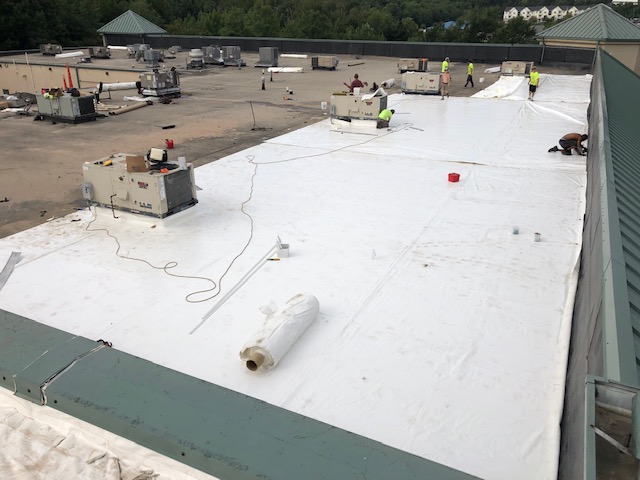
When a flat roof reaches the end of its service life, owners generally have two paths. A recover (reroof) installs a new membrane over the existing roof, saving the cost and downtime of removing the old system — a viable option when the deck is sound, moisture isn't trapped below, and code allows the additional layer. A full replacement (tear-off) removes everything down to the deck, letting us correct wet insulation, drainage problems, and deck damage before the new system goes on.
The right answer depends on how many roof layers already exist, the moisture content of the current assembly, and your long-term plans for the building. With 50+ years of experience and more than 2.6 million square feet installed, our team gives you a straight assessment of which approach protects your investment best — not simply the bigger job.
Protecting Your Investment with Maintenance
A commercial roof is one of the largest capital assets on your building, and low-slope systems reward proactive care. A simple maintenance program dramatically extends service life:
- Semi-annual inspections — ideally spring and fall — to catch seam, flashing, and drainage issues early.
- Drain and gutter clearing to prevent ponding and ice-dam damage through Maryland winters.
- Prompt sealing of minor punctures from foot traffic, hail, or equipment servicing.
- Post-storm checks after high winds or heavy snow loads common to the Mid-Atlantic.
Documented maintenance also keeps manufacturer warranties valid, since neglect is a common reason claims are denied. To schedule an inspection of your flat or low-slope roof, call 410-838-5900.
Frequently Asked Questions
How long does a commercial flat roof last?
Lifespan depends heavily on the membrane: a quality PVC or Duro-Last® system commonly lasts 20 to 30 years, TPO and EPDM typically 15 to 25 years, and built-up or modified bitumen systems 15 to 20 years. Installation quality, drainage design, and regular maintenance are just as important as the material itself. A well-maintained low-slope roof consistently outperforms a neglected one of the same type.
Can you install a new flat roof over the existing one?
Often yes — a recover installs a new membrane over the existing roof and saves the cost and downtime of a tear-off. It's only appropriate when the deck is structurally sound, there's no trapped moisture below, and building code permits the additional layer (typically no more than two total). We perform a moisture survey first, because covering a wet roof simply seals the problem inside.
Why does water pond on my flat roof, and is it a problem?
Ponding usually results from inadequate slope, clogged or undersized drains, deck deflection, or compressed insulation. Water that sits longer than 48 hours accelerates membrane aging, adds structural load, and voids many warranties. It's a fixable issue — solutions range from clearing drains to installing tapered insulation to re-establish positive drainage.
What is the best membrane for a commercial flat roof?
There is no single best membrane — the right choice depends on your building's use, budget, and exposures. PVC (including Duro-Last®) excels where chemical and grease resistance and welded-seam reliability matter, TPO offers strong energy performance at a lower cost, and modified bitumen provides rugged multi-ply redundancy. We assess your facility and recommend the system that fits rather than defaulting to one product.
How much does a commercial flat roof cost?
Cost varies with roof size, membrane type, insulation, existing conditions, and whether it's a recover or full tear-off, so a per-square-foot range is only meaningful after an inspection. A recover generally costs less than a full replacement because it avoids removal and disposal. We provide a detailed, itemized proposal so you can see exactly what drives the price for your building.
How disruptive is a commercial reroof to daily operations?
Most low-slope reroofs are completed without closing the building. We schedule work in phases, seal exposed areas watertight at the end of each day, and coordinate around your operating hours and tenants. Noise and access near active work zones are the main considerations, and we map those out with you before work begins.
Explore Our Commercial Roofing Services
Duro-Last® PVC Systems · Commercial Roof Repair · Reroofing & Replacement. Serving Bel Air, Baltimore & the surrounding area.
Request a Free Commercial Roofing Estimate
Call 410-838-5900 or request your free estimate online — backed by 50+ years of commercial roofing experience.